
About the Author / この記事を書いたひと
Starting N-Scale from Zero / ゼロから始めるNゲージ
My journey with N-scale began in elementary school when my parents bought me my very first set. I launched this site to share the fascinating world of Japanese N-scale model railroading with enthusiasts all over the globe.
Nゲージを始めたきっかけは、小学生の頃に親から初めて買ってもらってから。世界中の人に日本のNゲージの魅力を知ってもらうために、本サイトを運営しています。
This article is for you, who are just starting to take an interest in N gauge. It will thoroughly explain, in the easiest-to-understand way, everything from the appeal of N gauge, what you need to start, specific costs, recommended sets for beginners, and even how to enjoy it after purchase and tips for continuing long-term.
In the following sections, you’ll discover how the door to the world of N gauge can open for you, and you’ll be ready to take your first step toward becoming a proud model train owner. Now, let’s explore the fascinating world of N gauge together!
- What is N Gauge? Its Appeal That We Recommend to Model Train Beginners
- The 3 Essential Items You Need to Start N Gauge
- N Gauge Starter Sets Thorough Comparison! How to Make a Smart Choice?
- What are the initial costs for N gauge? Purchase plans by budget.
- Where can you buy N gauge? Pros and cons of purchase locations.
- Steps after purchasing N gauge: From unboxing to running
- Tips and Cautions for N Gauge Beginners!
- Conclusion: N Gauge is a Lifelong Hobby That Stimulates Creativity
What is N Gauge? Its Appeal That We Recommend to Model Train Beginners
First, we’ll explore what exactly “N gauge” is and why so many model train fans in Japan, especially beginners, choose it.
N Gauge Basics: Scale and Features You Should Know
N gauge is one of the most widely adopted standards for model trains worldwide. Its main characteristics lie in its “scale” and “gauge (track width).”
- World Standard 9mm Gauge: The “N” in N gauge originates from the number “Nine.” This indicates that the distance between the rails (the gauge) is 9mm. This 9mm gauge is an international standard, and many manufacturers, both domestic and international, produce and sell N gauge products.
- Japan’s Unique Scales of 1/150 and 1/160: In Japan, the scale for conventional line rolling stock (such as commuter trains and limited express trains) is generally 1/150, while Shinkansen (bullet train) train car is made to 1/160 scale. These scales allow for the impressive realism of actual trains to be enjoyed in a handheld size. While the scale may vary by country overseas, the 9mm gauge is common.
Thanks to this unified standard, it’s possible to combine and enjoy train cars and tracks from different manufacturers to some extent (though some products may not be compatible).
Why is N Gauge popular among beginners in Japan?
Among the many model train standards, why does N gauge receive such overwhelming support, especially from beginners? The following three main points summarize the reasons.
1. An Overwhelmingly Rich Product Lineup:
N gauge is the most popular model train standard in Japan, which means the variety of train cars available as products is far greater than any other gauge. From Shinkansen trains to suburban commuter trains and rural local lines, manufacturers have produced models of virtually every type of Japanese rolling stock.
2. Easy to Enjoy in a Small Space:
One of the attractions of N gauge train cars is its compact size, small enough to fit in the palm of your hand. This means you can fully enjoy authentic operation and layout (diorama) construction even in limited spaces, such as on a living room table, a corner of a bookshelf, or on top of a storage cube. Even those who had given up on model trains, thinking “you need a large space,” can easily start with N gauge. With just one tatami mat’s worth of space, building a rather impressive layout is not a dream.
3. Accessible Price Range and Comprehensive Starter Sets:
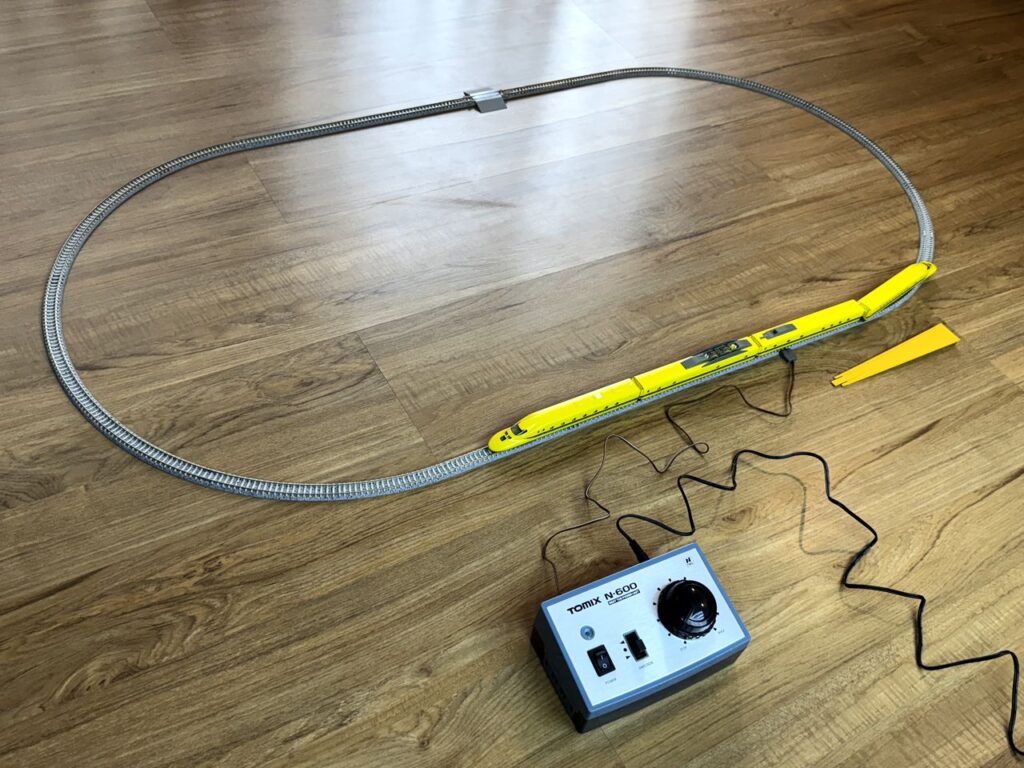
Compared to other larger gauges (like HO gauge), N gauge allows you to acquire basic items such as train cars, tracks, and power packs at a relatively lower cost. Furthermore, major manufacturers offer numerous starter sets that include everything you need to begin with N gauge, all in one package. These sets are often priced more affordably than purchasing items individually, making them a very reassuring option for beginners who don’t know what to choose. This “ease of getting started” significantly lowers the barrier to entry for N gauge.
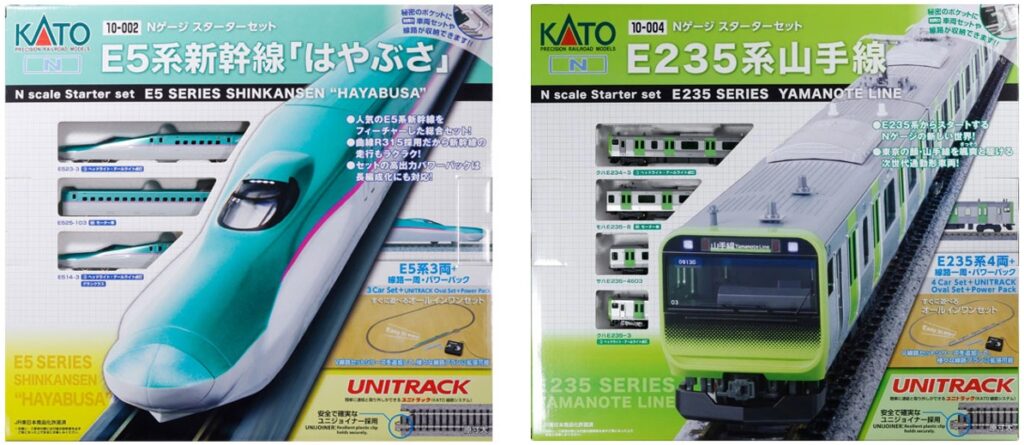
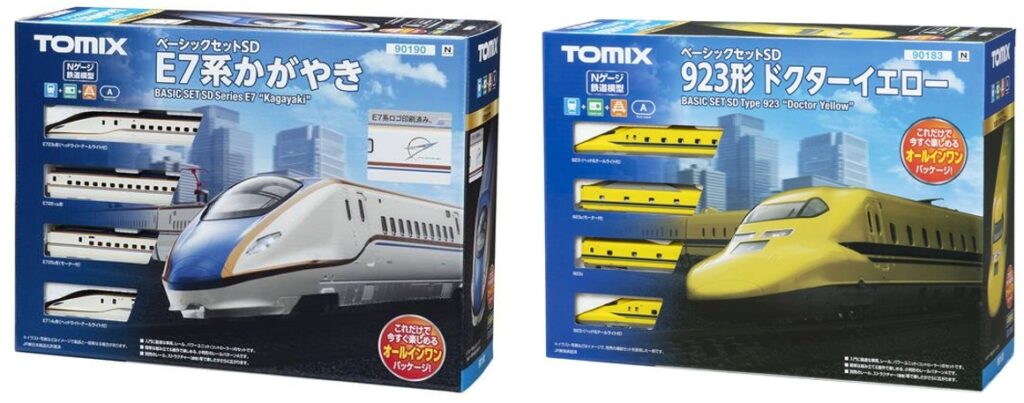
For these reasons, N gauge is the most recommended choice for beginners who want to “start model railroading in Japan.”
The 3 Essential Items You Need to Start N Gauge
Now that you understand the appeal of N gauge, what do you actually need to get started? Basically, with the following three items, you can immediately run a train.
“Train cars” Carrying Your Dreams
The main attraction, above all, is the “train cars.” N gauge train cars include “powered cars (motor cars)” which have an internal motor and can run on their own, and “trailer cars” which do not have power and are pulled or coupled by a powered car.
- Start by choosing your favorite train cars: There are various types of train cars, such as Shinkansen, limited express trains, commuter trains, and steam locomotives. The trick to long-lasting enjoyment is to first choose a vehicle you genuinely “want to run!” – whether it’s an aspirational train or a familiar commuter train you feel an attachment to. Starter sets often include popular train cars, so choosing from there is also a good option.
- Formation Basics: Many trains consist of multiple cars coupled together to form a “train set” or “formation.” Starter sets often include a basic formation (e.g., 3 to 4 cars). In most cases, it’s one of the joys of N gauge to later purchase additional car sets, often called “add-on sets,” to create a more realistic, longer formation.
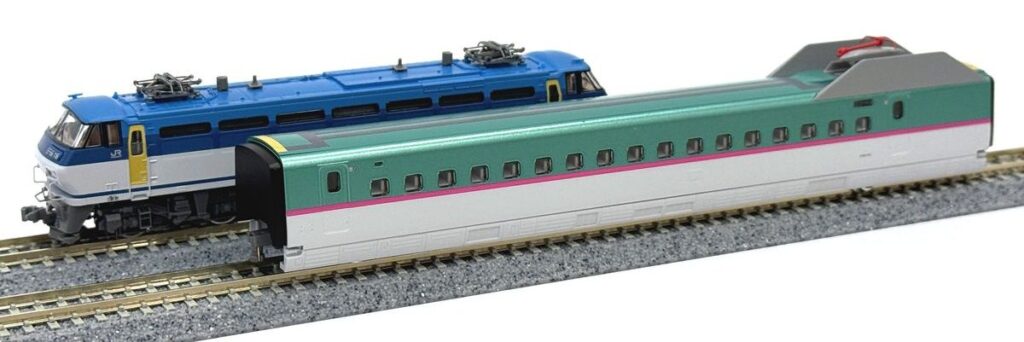
An electric locomotive and the E5 Series Shinkansen
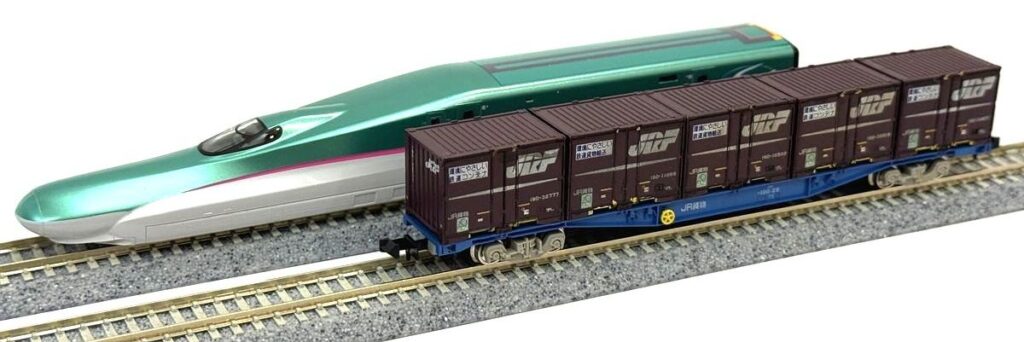
A trailer car of the E5 Series Shinkansen and a container freight car.
“Tracks (Rails)” Guiding the Train
Naturally, “tracks (rails)” are necessary to run a train. N gauge tracks typically consist of metal rails fixed onto a plastic roadbed (a base expressed with ballast or concrete) that includes sleepers.
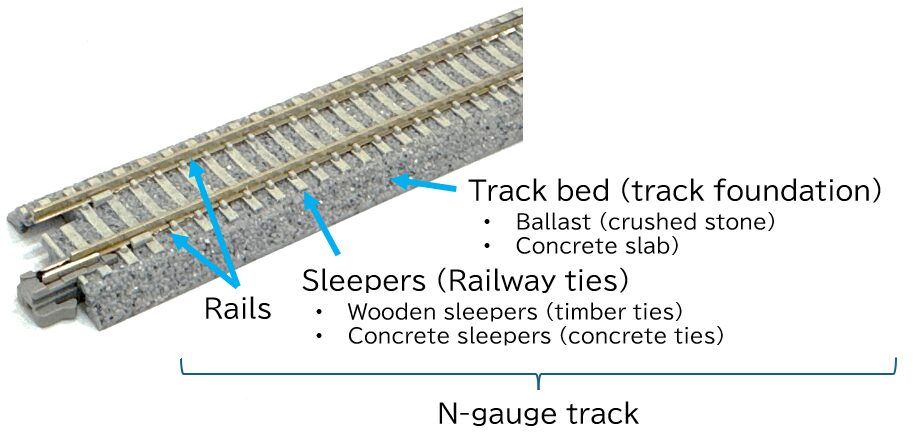
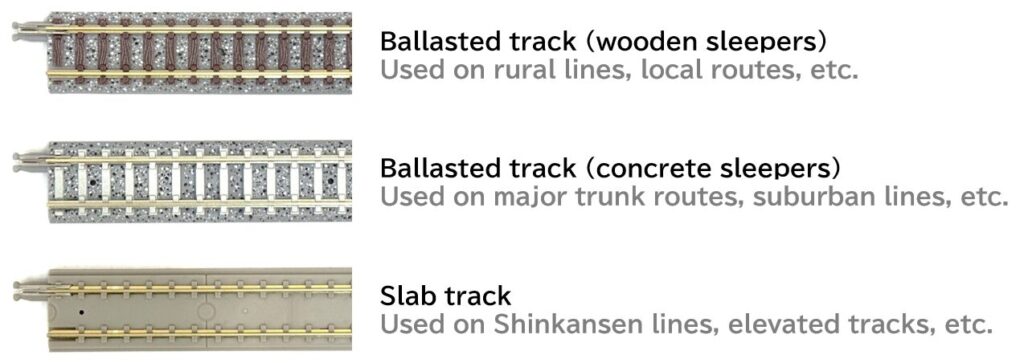
- Crucial Role of Conducting Electricity: Tracks are not just pathways for trains; they also play the vital role of supplying electricity to the rolling stock. Electricity supplied from the power pack travels through the tracks and is transmitted to the motor via the train’s wheels, causing the train to run.
- Various Track Shapes: The basic components are “straight rails” and “curved rails.” By combining these, you can lay a circular (endless) track. Furthermore, there are various other types of tracks, such as “point rails (turnouts)” to divert trains to different lines, and “gradient piers” to create slopes. Combining these allows for the creation of more complex and realistic running routes.
- Maintenance is Also Important: Metal rails can become dirty with fingerprints or dust, which can impede the flow of electricity and cause unstable running. Regular cleaning is necessary.
The “Controller” That Brings Life
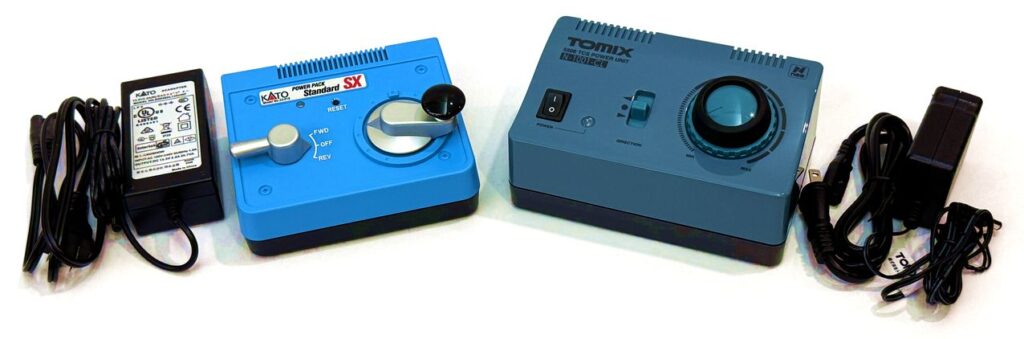
In KATO, it’s called a “Power Pack,” and in TOMIX, it’s called a “Power Unit.” This controller converts household AC power into the appropriate voltage and current for N gauge rolling stock to operate, supplying it to the tracks.
- Speed Adjustment and Direction Switching: Controllers typically have a dial or lever that allows you to freely control the train’s speed. They also feature a switch to change the direction of travel. The sensation of operating a train with your own hands is one of the greatest pleasures of N gauge.
- Power Source Type: Most controllers draw power from a household outlet via an AC adapter.
- Extended Features: Recent controllers also include various advanced features, such as the ability to illuminate headlights and tail lights even when the train is stationary (constant lighting function), and those that allow for more realistic operation with a lever mimicking a real train’s throttle handle.
“Feeder” Connecting Track and Controller
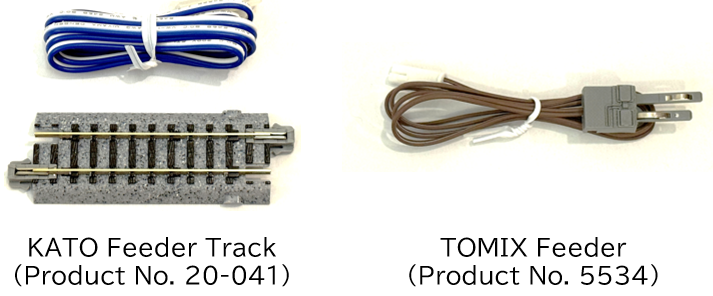
To supply electricity from the controller to the tracks, a “feeder” is used to connect them. In TOMIX, it’s called a “D.C. Feeder.” KATO sells a “Feeder Track” which includes a special piece of track for connecting the feeder. TOMIX, on the other hand, sells the feeder separately as it can connect to any track. Since the connection shapes differ between KATO and TOMIX, choose a feeder from the same manufacturer as your controller.
N Gauge Starter Sets Thorough Comparison! How to Make a Smart Choice?
Advice for Beginners: All-in-one Sets Are Highly Recommended!
While it’s possible to select and acquire these vehicles, tracks, and power packs individually, for beginners, we strongly recommend purchasing an all-in-one set that includes everything. The reasons are:
Starting with a set to experience the basic joys of N gauge, and then gradually adding items to suit your preferences, is a smart way to begin.

“I understand that a set is good, but there are so many kinds, which one should I choose?”
I’ll answer that question. I’ll introduce you to the key points for choosing the perfect set from the many available, along with the characteristics of the major manufacturers.
Point 1: Choose by the “Rolling Stock” that Captivates You
It’s no exaggeration to say that the most important point when choosing a set is the “train cars” included in it. After all, if it’s not a train you genuinely think “that’s cool!” or “I want to run that!”, your enjoyment will be halved.
A Full Lineup of Popular Trains
Starter sets include popular trains carefully selected by each manufacturer, such as the latest Shinkansen like the E5 Series “Hayabusa” and N700S “Nozomi”, urban commuter trains like the E235 Series Yamanote Line, or famous limited express trains of yesteryear.
Prioritize Your “Likes”
First, check each manufacturer’s catalog or website to see what kind of rolling stock is available in their starter sets. Whether it’s a limited express train you admired as a child, a memorable train you rode on a trip, or a train whose design you simply like, choosing based on your “likes” is the best approach. The joy of running your favorite train with your own hands is truly special.
Point 2: Choose by Reputable “Manufacturer” – KATO vs. TOMIX
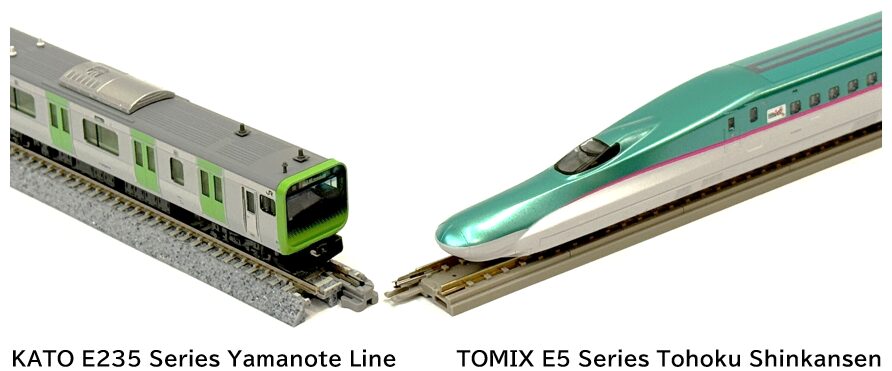
While many manufacturers exist in the world of N gauge, KATO and TOMIX are the two major manufacturers that stand out, offering a robust selection of beginner-friendly products and a solid reputation for quality. Understand their respective characteristics to choose the starter set from the manufacturer that suits you best.
KATO’s Features and Appeal
KATO Co., Ltd. is a model train manufacturer headquartered in Saitama Prefecture, and it has earned a globally high reputation for its precise craftsmanship and stable running performance.
- Overwhelming Ease of Use of “Unitrack”
KATO’s “Unitrack” track system was a pioneer in roadbed-integrated tracks, characterized by its easy, secure one-touch connection and high durability and stability. It’s especially recommended for those new to N gauge because even beginners can assemble tracks easily and reliably.
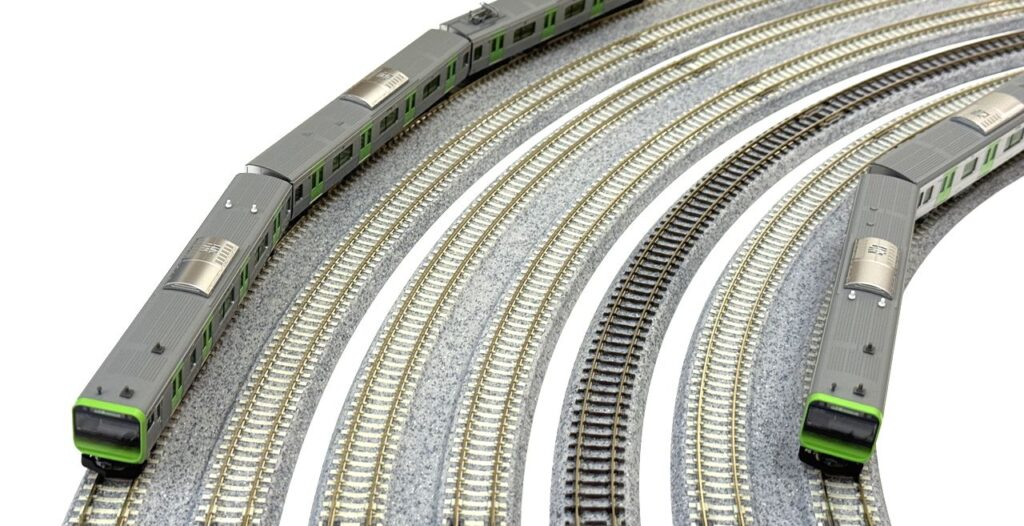
- Wide Range of Train Cars Lineup
KATO produces an extremely wide range of vehicle types, from the latest JR vehicles to famous trains from the JNR era, private railway cars, and even niche specialized rolling stock. Furthermore, the performance of their motors, which accelerate smoothly from low speeds, has long been highly regarded, earning the trust of many collectors.
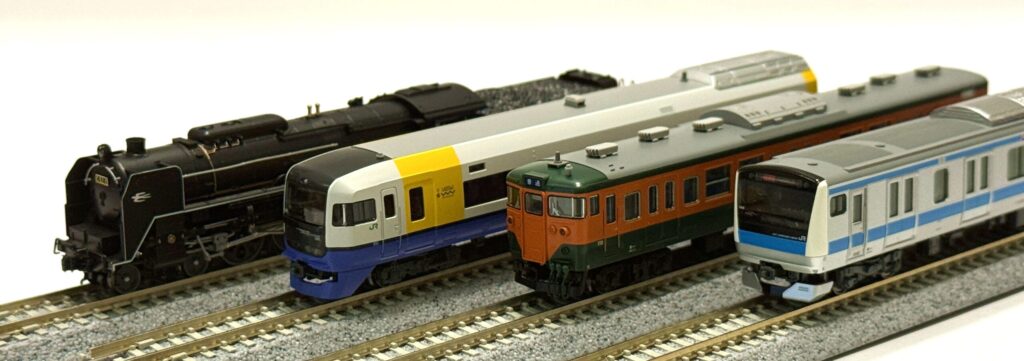
- Representative Sets
KATO’s sets are called “Starter Sets.” For example, the “KATO N Gauge Starter Set E235 Series Yamanote Line” and the “KATO N Gauge Starter Set E5 Series Shinkansen Hayabusa” include popular rolling stock, Unitrack, and the easy-to-use “Power Pack Standard SX” controller, making them extremely popular for beginners.
TOMIX’s Features and Appeal
“TOMIX” is a model train brand developed by Tomytec Co., Ltd. Its appeal lies in its rich lineup of rolling stock and products that pursue realistic representation.
- “Fine Track” for Realistic Appearance and Expandability
TOMIX’s “Fine Track” track system offers more realistic representations of rail sides and sleepers, making it suitable for diorama creation. Furthermore, it boasts an extensive array of system expansion parts like point rails, sensors, and signals, catering to users who wish to pursue more advanced enjoyment, such as building elaborate layouts and implementing automatic operation.
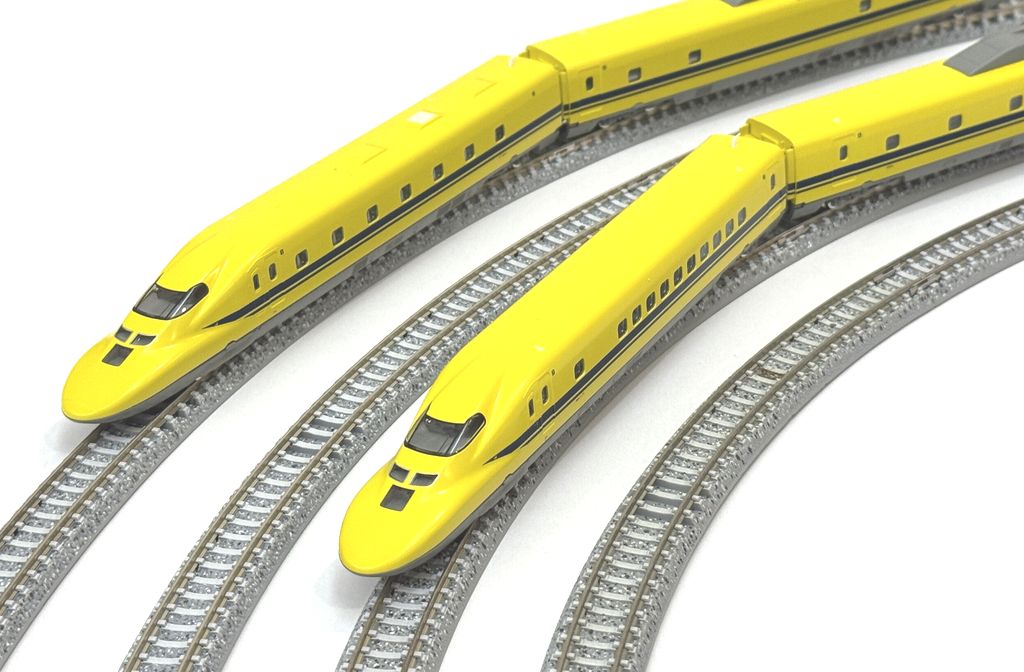
- Wide Range of Train Cars Lineup
TOMIX also commercializes an extremely wide range of vehicle types, from the latest JR vehicles to famous trains from the JNR era, private railway cars, and even niche specialized rolling stock. For those who want to stick to a particular railway company or model, it will be an attractive option.
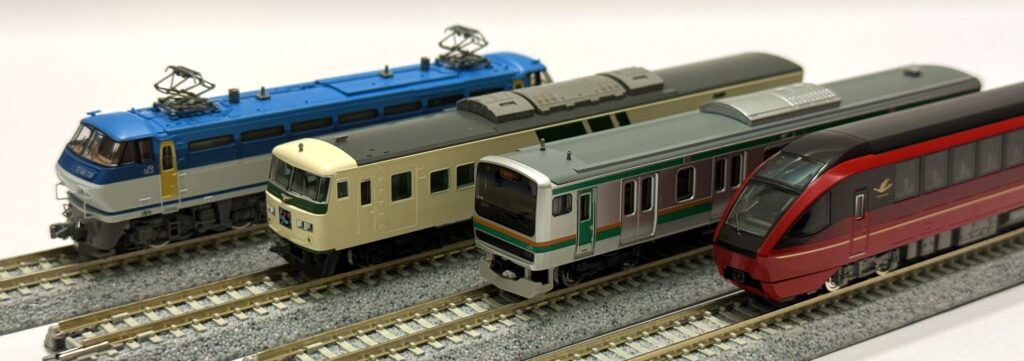
- Representative Sets
TOMIX’s sets are called “Basic Sets.” Examples like the “TOMIX Basic Set SD E7 Series Kagayaki” and “TOMIX Basic Set SD 923 Series Doctor Yellow” include realistic Fine Track and the easy-to-use “N-600” power unit, among other items, making them popular with beginners as well.
Basically, it’s possible to run KATO trains on TOMIX tracks, and vice versa. However, connecting tracks directly from different manufacturers is not possible (though it can be done using adapter rails). Also, the connection between the controller and the track (feeder) varies in shape by manufacturer, so for beginners, it’s safest to keep the tracks and controller from the same manufacturer. With a set, you don’t have to worry about this.
For those particular about rolling stock, a set without rolling stock is also an option.
While various types of rolling stock are sold by each company, the rolling stock included in sets is limited to popular ones. If your favorite rolling stock isn’t available in a pre-selected set, and you absolutely want to stick to your preferred rolling stock, you have the option of buying a set without rolling stock and purchasing your desired rolling stock set separately.
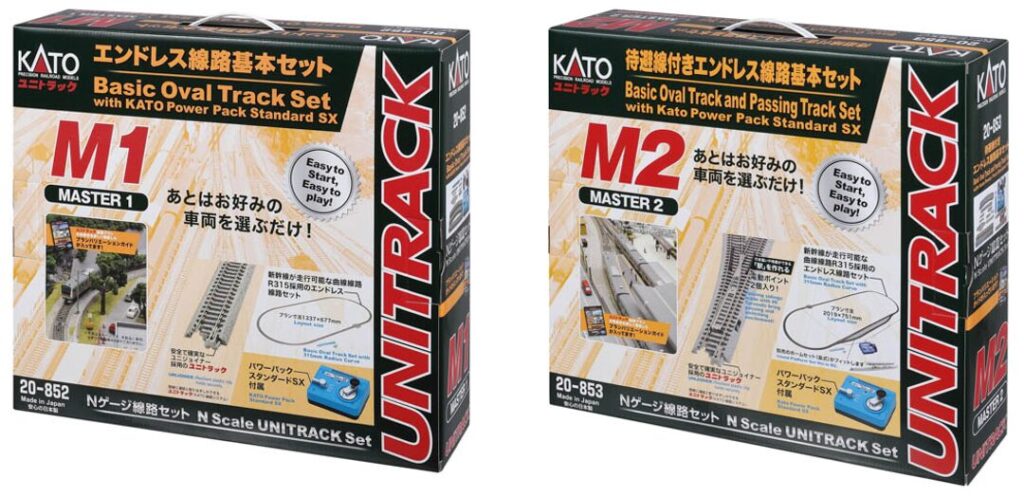
KATO’s rolling stock-less set: “Master Set“
- M1 (Master 1): A set with a simple, single-track loop layout.
- M2 (Master 2): A set that includes points to create a passing siding.
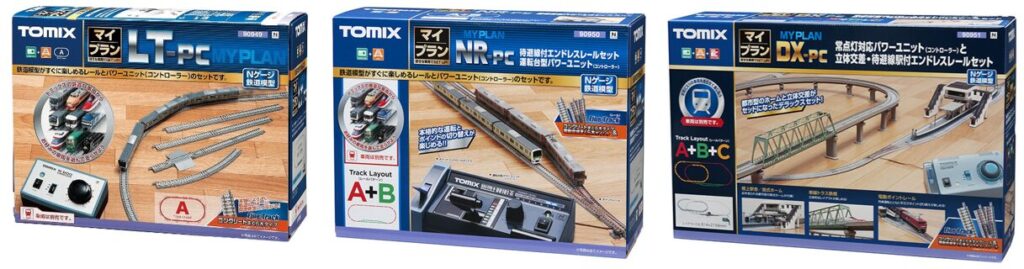
TOMIX Rolling Stock-less Set “My Plan“
- LT-PC: A simple layout with only a single-track loop.
- NR-PC: Includes points, allowing for the creation of passing sidings.
- DX-PC: In addition to points, it includes elevated tracks, making it possible to assemble grade separations.
A unique feature of TOMIX’s My Plan sets is that the type of controller varies depending on the set.
What are the initial costs for N gauge? Purchase plans by budget.
When starting N gauge, “cost” is naturally a concern, right? I’ll provide an estimate of how much budget you should anticipate.
The Easiest Option! Price Range of Starter Sets
As mentioned earlier, if you’re starting N gauge, a starter set is the most convenient and economical option.
- Estimate: Around 15,000 to 20,000 yen
Many starter sets that include popular rolling stock can be purchased in this price range. For example, sets with commuter train types might start from the latter half of 10,000 yen, while those with Shinkansen or popular limited express trains typically range from 15,000 to 20,000 yen.
- Reconfirm Set Contents
This price usually includes rolling stock (around 3-4 cars), the minimum necessary tracks (rails) for running, a feeder, and a controller (with AC adapter). In other words, by purchasing just one of these, you can immediately experience the world of N gauge.
Estimated Costs for Acquiring Items Individually (Reference)
If you prefer to choose your rolling stock, tracks, and controller individually rather than buying a set, here’s a rough idea of the costs:
- Rolling Stock: For a basic 3-4 car formation including a powered car, approximately 8,000 to 15,000 yen. Prices vary depending on the type of rolling stock, popularity, and gimmicks (like lighting).
- Tracks: For building a basic endless (loop) layout, combining straight rails, curved rails, and feeder tracks will cost around 5,000 yen.
- Controller: 5,000 to 15,000 yen. There’s a wide range from simple to highly functional.
- Feeder: Less than 1,000 yen.
Summing these up, acquiring items individually can start from at least around 20,000 yen, and it’s not uncommon for it to exceed 40,000 yen if you’re particular. Clearly, starter sets tend to keep initial costs down.
Are there any tips to keep the budget down?
For those thinking, “I want to keep the budget down a bit more…”, here are a few tips.
Take advantage of sales and campaigns.
Model shops, electronics retailers, and online stores periodically hold sales and campaigns. Aiming for such opportunities is one way to save money.

Start with a Minimal Configuration
Instead of trying to acquire many trains and complex tracks all at once, it’s wise to first experience the joy of N gauge with a set or a minimal configuration. Then, gradually add items as your budget allows.
Consider Using Used Items
Used N gauge products are available at model train specialty stores and online auctions. If you choose items in good condition, such as rolling stock and tracks, you might be able to get them for less than new ones. However, it’s important to confirm that they are fully functional and that no parts are missing.
Where can you buy N gauge? Pros and cons of purchase locations.
When you decide to buy N gauge, you might wonder where to buy it and what the best place is for you. Let’s look at the main purchase locations and their respective advantages and disadvantages.
If you want to choose carefully: “Model Railway Specialty Store”
These stores specialize in model railways. They range from traditional independent shops to large chain stores operating nationwide.
Advantages:
Disadvantages
\ Recommended for people who are… /
…anxious about buying N gauge for the first time, want to choose carefully while consulting with staff, or are looking for niche parts and information.
By the way, the store I, as the administrator, often visit is Popondetta. Not only do they have a rich selection, but some stores also have rental layouts where you can bring and run your own trains. They have stores nationwide, mainly in shopping malls and department stores, so you might actually have one near you.
Familiar “Electronics Retailers / Hobby Shops”
N gauge products are also available in the hobby corners of large electronics retailers like Yodobashi Camera and Bic Camera, as well as general hobby shops like TamTam and Hobby Zone.

Advantages:
Disadvantages:
\ Recommended for people who are… /
…want to see the actual product first, want to purchase while doing other shopping, or want to utilize reward points.
Convenient and Easy to Compare “Online Stores”
N gauge is actively traded online through major e-commerce sites like Amazon, Rakuten Ichiba, and Yodobashi.com, as well as direct sales sites from manufacturers like KATO and TOMIX, and specialized model railway e-commerce sites.
Advantages:
Disadvantages:
\ Recommended for people who are… /
…don’t have a specialty store nearby, want to buy as cheaply as possible, want to compare carefully, or have some knowledge of N gauge.
Choose the optimal purchase location based on your lifestyle and what you seek in N gauge.
Steps after purchasing N gauge: From unboxing to running
Once you’ve got your long-awaited N gauge, it’s time for the exciting running session! Here, assuming you’ve purchased a starter set, we’ll explain the basic steps from unboxing to actually running the train.
Step 1: Exciting Unboxing and Track Assembly
First, open the box of your purchased set and check its contents. Typically, it includes rolling stock, tracks, a controller, an AC adapter, instructions, a re-railer, and so on.
1. Check Contents
Confirm that all parts are present and there’s no damage.

(The basic configuration is similar to that of KATO.)
2. Secure a flat surface.
Secure a flat and stable surface, such as the floor or a table, to lay the tracks. A low-dust area is ideal.
3. Connect the tracks.
Following the instructions, connect the track pieces. With KATO’s Unitrack, listen for a “click,” and with TOMIX’s Fine Track, firmly fit the joint parts together. Start by assembling the most basic oval shape.


Step 2: Connect the Power Pack and Get Ready
Next, connect the controller, which supplies electricity to the rolling stock, to the tracks.
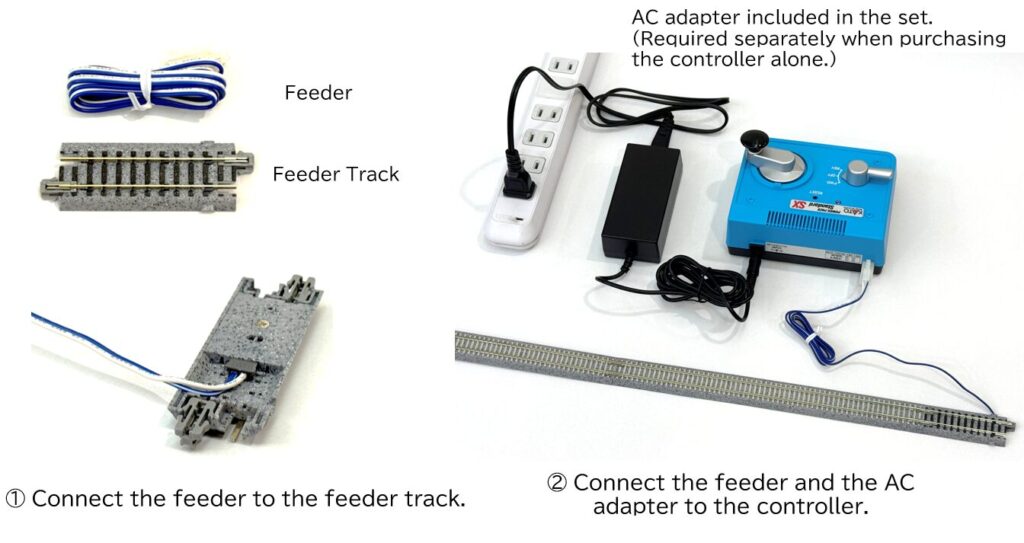
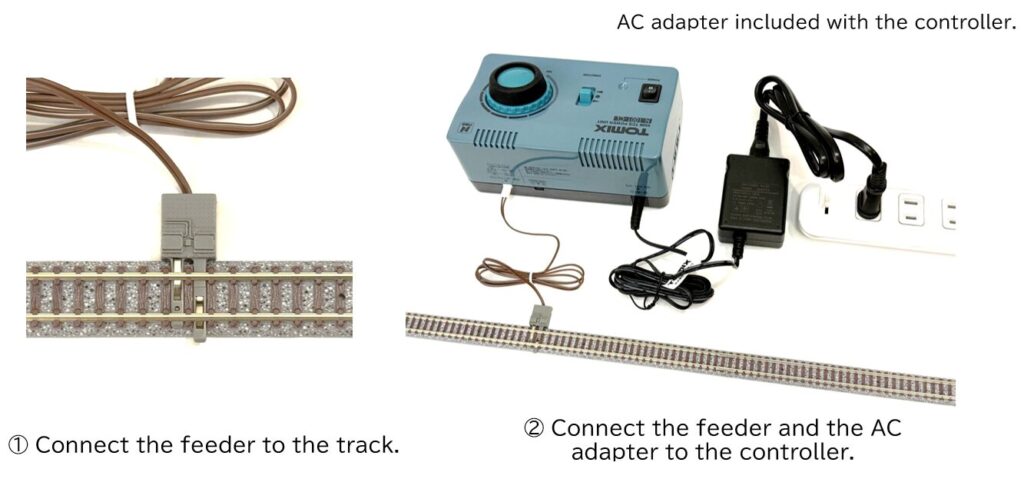
1. Attach the feeder to the track.
In KATO’s case, there’s a special piece of track called “feeder track” within the track set for attaching the feeder. In TOMIX’s case, there are slots in the center of each track piece for attaching the feeder, so you can attach it at your preferred position.
2. Connect to the controller.
Connect the other end of the feeder to the designated input on the controller. The connection method varies by manufacturer and model, so always check the instructions.
3. Connect the AC adapter.
Connect the AC adapter to the controller, and then plug the AC adapter into a household outlet. This completes the electrical setup.
Step 3: Tips for Gently Placing Rolling Stock on the Track
Finally, it’s time to place the main rolling stock on the track. N gauge rolling stock is precisely made, so careful handling is important.
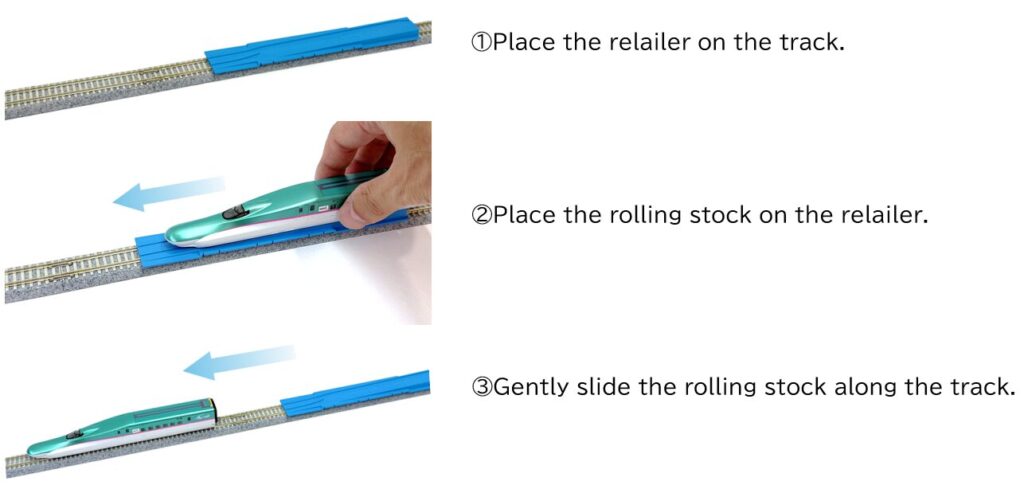
1. Utilize the re-railer
Many starter sets include a “re-railer,” an auxiliary tool for easily placing rolling stock on the track. Simply place the re-railer on the track and slide the rolling stock along its grooves to smoothly set the wheels on the rails. This is an essential item for beginners.
2. Placing by hand
If you don’t have a re-railer or once you’ve gotten used to it, you can also place them by hand. Looking at the rolling stock from directly above, slowly place it down, ensuring that both left and right wheels are firmly on their respective rails. If all wheels are not correctly on the track, it may derail or not run properly.
Step 4: Full Speed Ahead! Your Exciting First Running Experience
1. Controller operation
Check that the direction switch on the controller is set to the direction you want the train to go.
2. Slowly turn the dial
Begin by slowly turning the speed adjustment dial (or lever) on the controller. The train should start moving quietly.
3. Control the speed
The train’s speed changes according to how much you turn the dial. Enjoy the fun of controlling the train with your own hands, speeding it up and slowing it down. You’ll enjoy it even more if you operate it with the sensation of driving a real train, such as reducing speed slightly on curves.
The excitement of running your N gauge for the first time with your own hands will surely be an unforgettable experience.

Tips and Cautions for N Gauge Beginners!
N gauge is a hobby that’s easy to start, but to enjoy it longer and more comfortably, there are a few tips and precautions to keep in mind. By understanding these, you can enrich your N gauge life.
Mindset for Enjoying Without Stress
N gauge is a profound hobby, but there’s no need to aim for perfection from the start.
- Starting in a small space is fine: There’s no need to feel pressured to “build a magnificent layout!” Start by simply spreading out the starter set tracks on a living room table or a corner of your flooring and enjoying casual operation. You can have plenty of fun even in a limited space, with a little ingenuity.
- Read the instructions at least once: Each product, whether rolling stock, controller, or track, comes with an instruction manual. It contains important information, especially regarding coupling methods, maintenance, and troubleshooting, so be sure to read through it thoroughly at least once.
To Make Your Precious Rolling Stock Last Longer
Precisely made N gauge rolling stock can have delicate parts. A little care can keep your valuable collection in good condition for a long time.
- Handle with care: When holding rolling stock, gently grip the body and be careful not to apply excessive force to delicate parts like antennas or pantographs. Also, dropping it from a height can cause damage.
- Proper storage: If you won’t be running it for a long time, storing it in its original case is fundamental. Avoid places exposed to direct sunlight or high temperatures and humidity. Protecting it from dust is also important.
Maintenance for Smooth Running
Regular maintenance is essential to maintain comfortable running.
- Regular cleaning of tracks and wheels:
- Why does it get dirty?: The surface of the tracks and the wheels of the rolling stock accumulate metal powder generated during running, dust from the air, and skin oils from hands. This dirt hinders the flow of electricity, causing jerky running or flickering lights.
- Cleaning method: Gently wipe the top surface of the rails with a cloth or cotton swab soaked in a dedicated rail cleaner liquid. Clean the wheels in the same way. KATO sells dedicated products like “Unicleaner,” and TOMIX offers “Rail Cleaner.” If you run trains frequently, doing this about once a week is ideal.
- What if running is jerky?: First, try the cleaning methods mentioned above. If it still doesn’t improve, it could be due to not only poor contact between wheels and rails but also a problem with the internal mechanism of the powered car. Avoid trying to fix it forcefully and consult the store where you bought it or the manufacturer.
Who to Consult When You’re Stuck
As you continue with N gauge, you might encounter unknown issues or troubles. In such cases, it’s reassuring to have someone you can consult with rather than struggling alone.
- The store where you bought it: Model railway specialty stores are often happy to provide sympathetic advice.
- Manufacturer support: Manufacturers like KATO and TOMIX provide customer support channels. You can ask questions about products or consult about repairs.
- Online communities and social media: There are many N gauge fan community sites and social media groups online. You can get advice from experienced senior modelers and interact with fellow hobbyists.
Conclusion: N Gauge is a Lifelong Hobby That Stimulates Creativity
N gauge is an attractive hobby that anyone can easily start, from adults who want to fulfill their childhood dreams to children who love trains. The small world created by palm-sized rolling stock stimulates your creativity and holds infinite possibilities.
Start with a beginner’s set and enjoy basic running. Then, gradually expand your rolling stock, extend your tracks, and place structures to create your own unique landscape. That process is truly filled with the joy of managing your own railway company.
Nothing would make us happier than if this article helps you start your N gauge life. So, why not take a step into the wonderful, profound, and long-enjoyable world of N gauge starting today? New discoveries and感動 (deep emotional experiences) surely await you.

Comment